
Let’s Hear It for the Rig: Designing Footloose at Hale
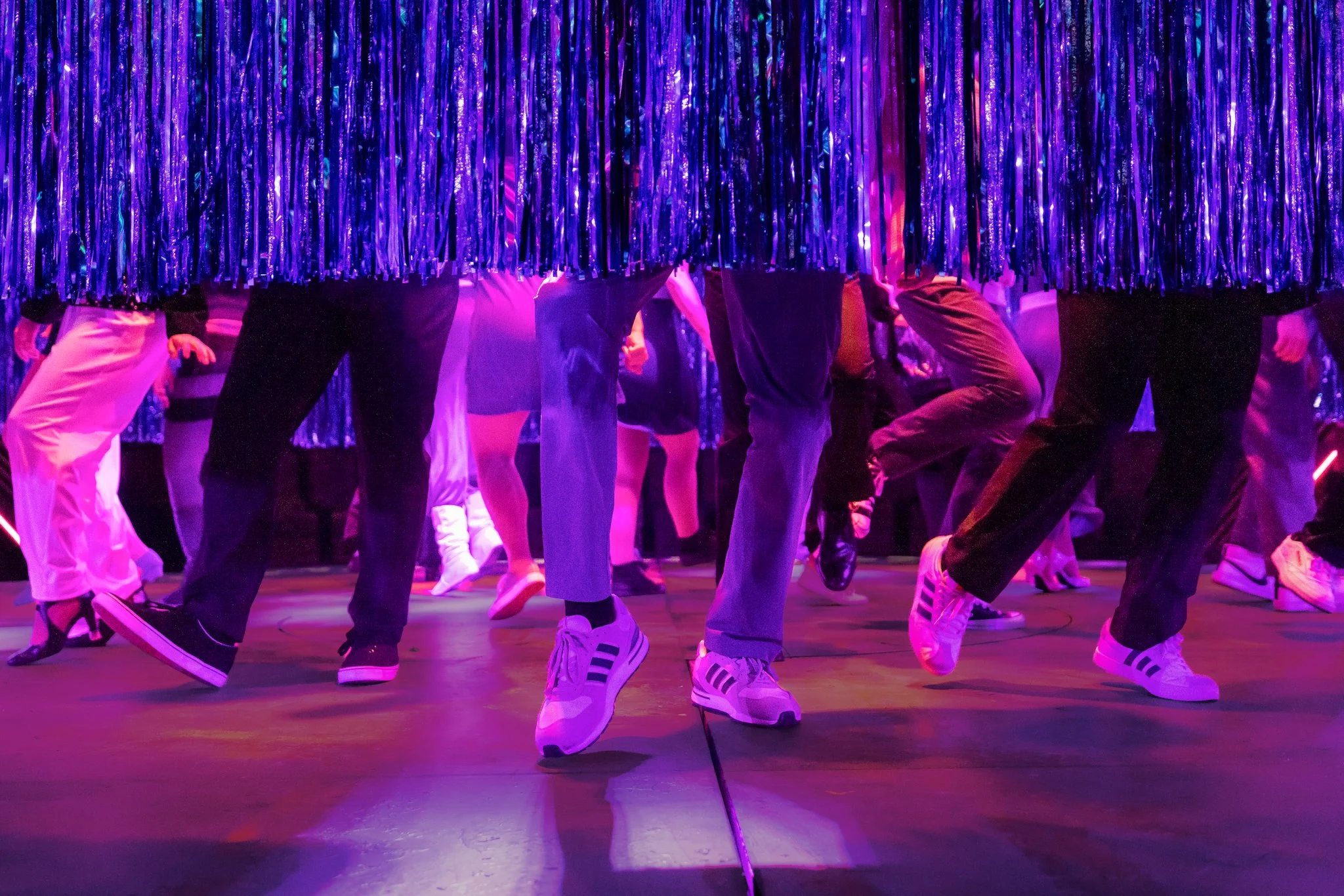
There are shows that invite design.MAnd then there are shows that demand it.
Footloose at Hale Centre Theatre was the latter: a charged mix of rebellion, nostalgia, and heartache, all underscored by rhythm and spectacle. From our first conversations, Director Dave Tinney gave us a clear challenge:
“Embrace 1984: Color, Music Video, DANCE.”
“Honor the iconography, not the parody.”
“Keep it honest.”
That direction became a compass for every cue, every media loop, every visual transition. We weren’t interested in camp. We were building something emotionally grounded and visually explosive. The design needed to hold grief and joy at once. It needed to breathe.
Planning the System
The lighting and video for Footloose weren’t just aesthetic choices. They were architecture. The entire rig was designed to evolve with the momentum of the story.
Lighting and FX Systems
123+ intelligent fixtures, including SolaTheaters, SolaFrame 3000s, Ayrton Diablos, Robe Tetra1, Elation Paragons, Fuze Pendants, and Rogue Outcast 1Ls
A hybrid system of ETC Source Four LED2 Lustrs, 750W conventionals with EDLT lenses, and Desire Fresnels
FX included haze and fog systems, sparkulars, confetti cannons, neon pixel bars, and flying scenic units
Dozens of practicals integrated across architecture and scenic
Our control structure spanned more than 100 universes across multiple networked nodes and dimmer rooms, with full RDM feedback and fixture monitoring. The channel hookup filled over 50 pages.
Design, drafting, and execution were made possible by a strong and collaborative team. Lindsey Young led the electrics with precision and calm. Collin Schmierer programmed with fluency and speed. Emma Belnap tracked documentation and helped bring the full plot online with impressive attention to detail.
Digital Scenic and Content Integration
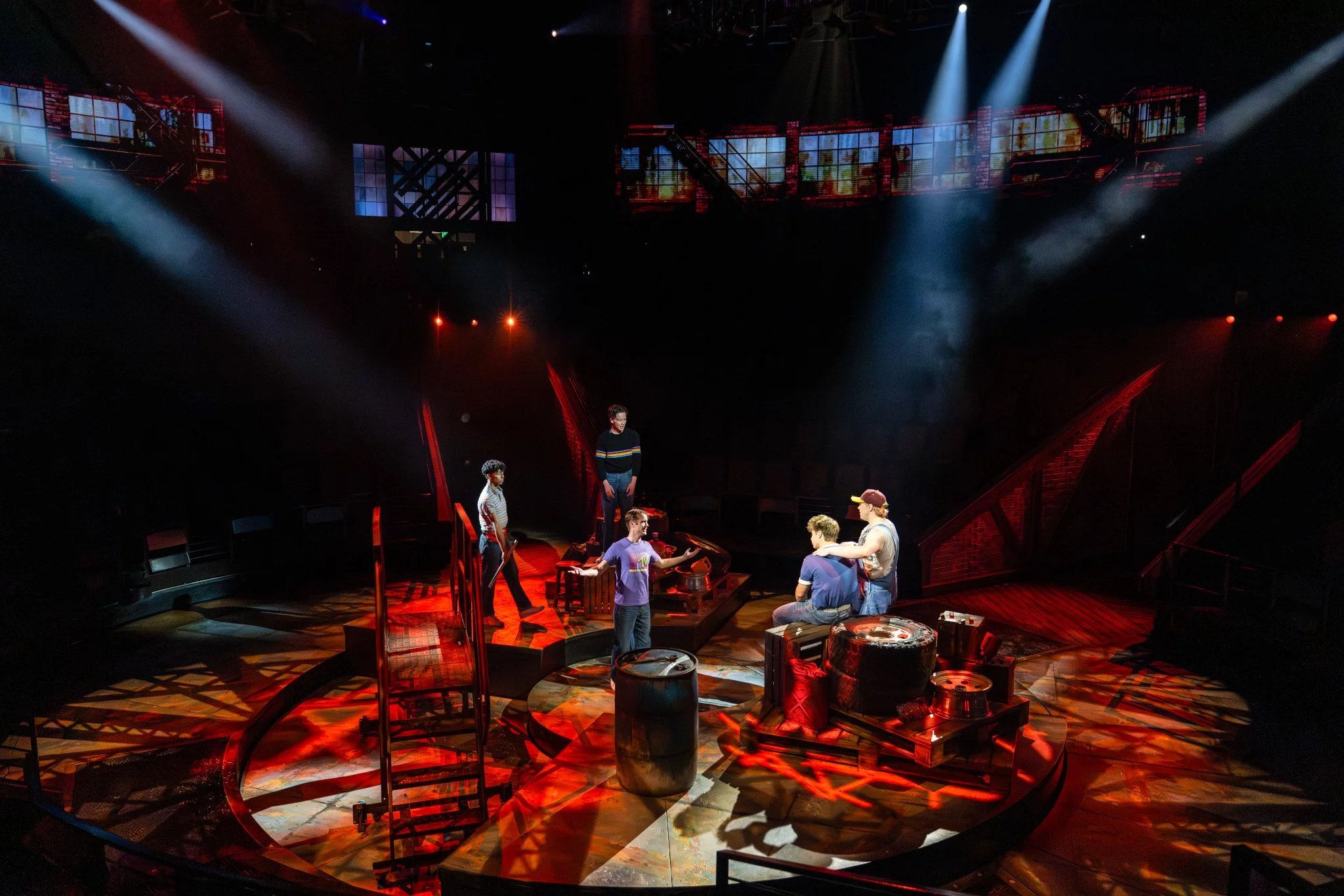
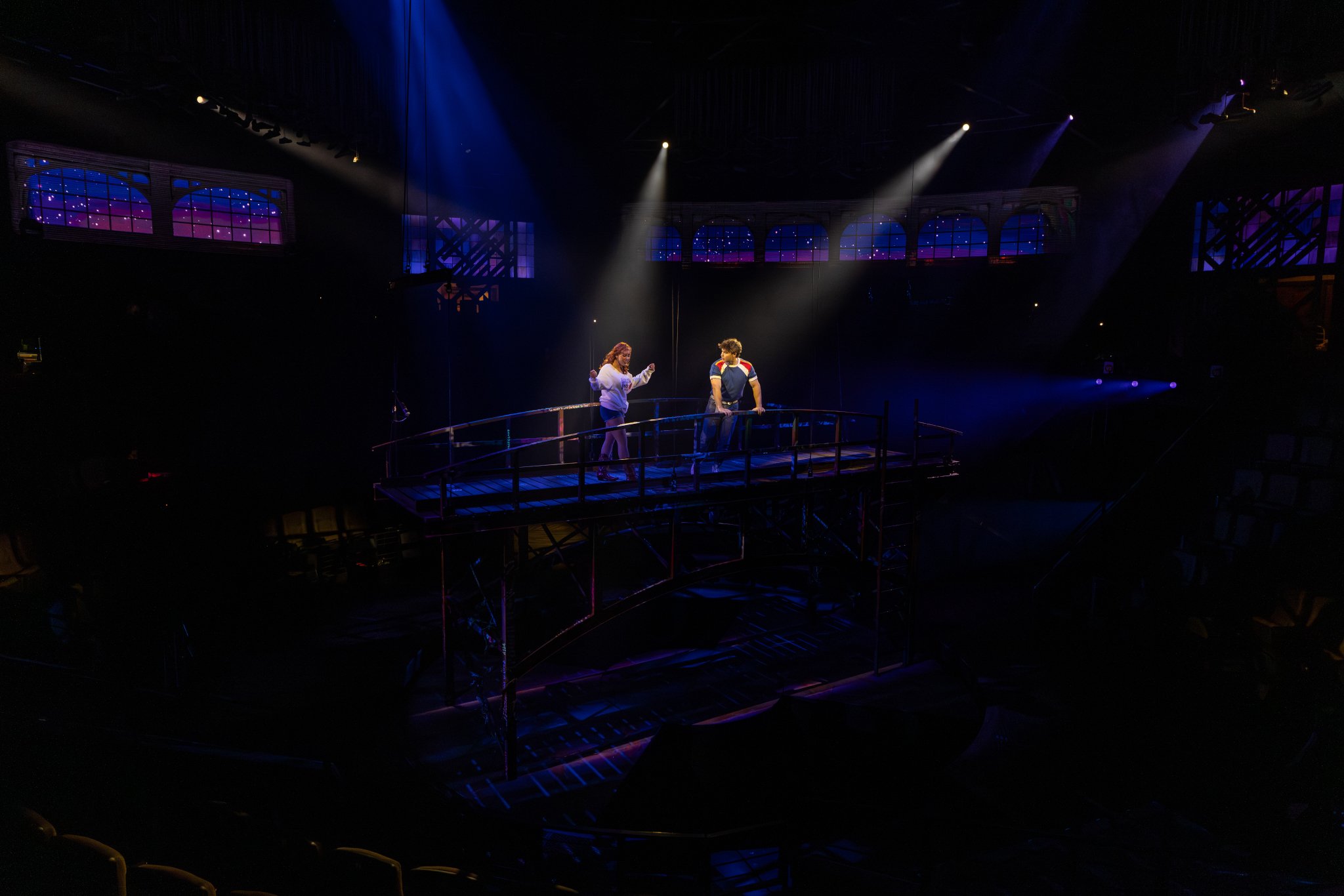
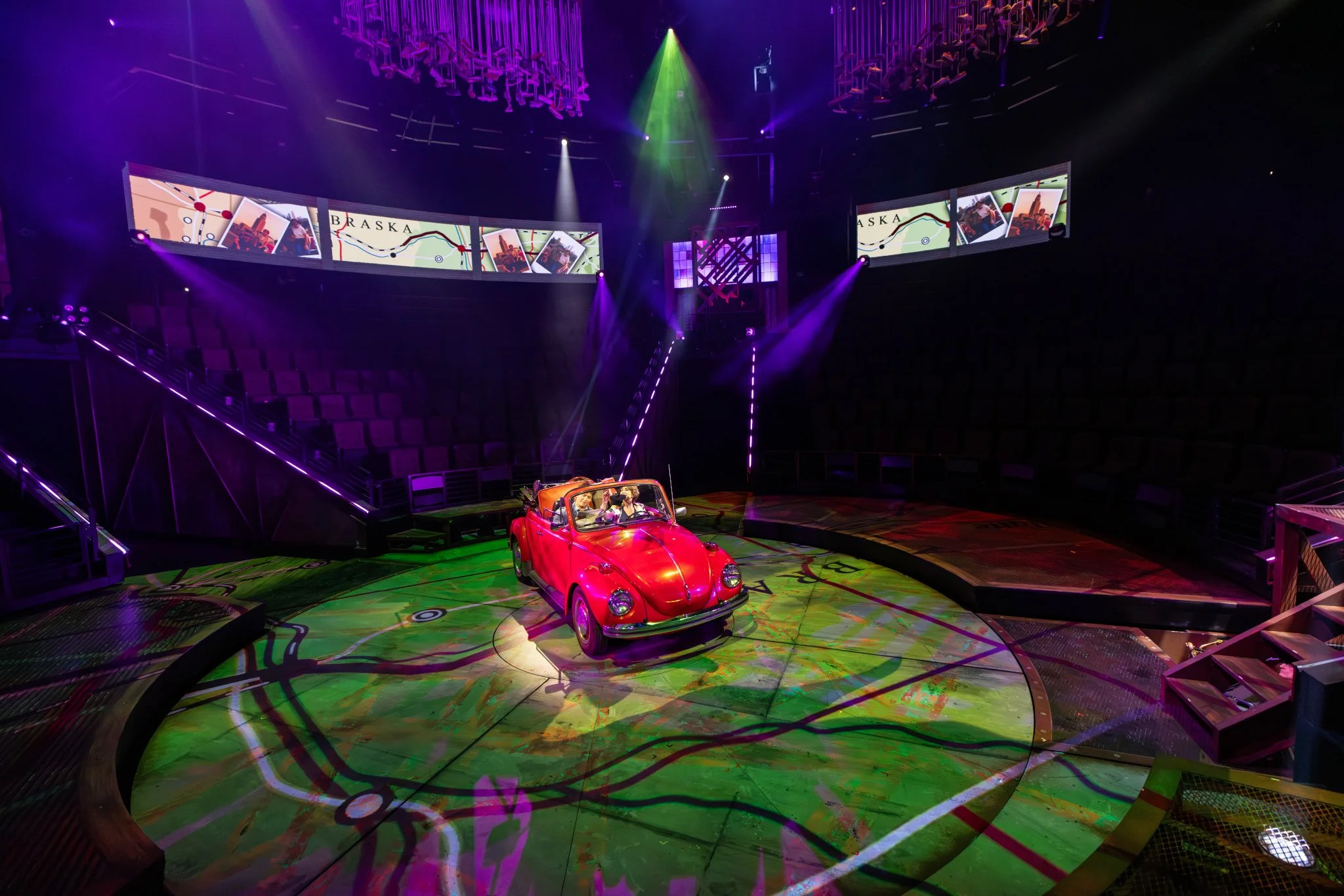
The media content for this production lived inside a series of architectural window panels. They were digitally mapped, but treated as fixed elements of the world. The design goal was simple: support location and tone without pulling focus.
We developed multiple window environments, including:
Frosted panes and warm stained glass for the church
Dusty blinds and sidelit reflections for the Moore home
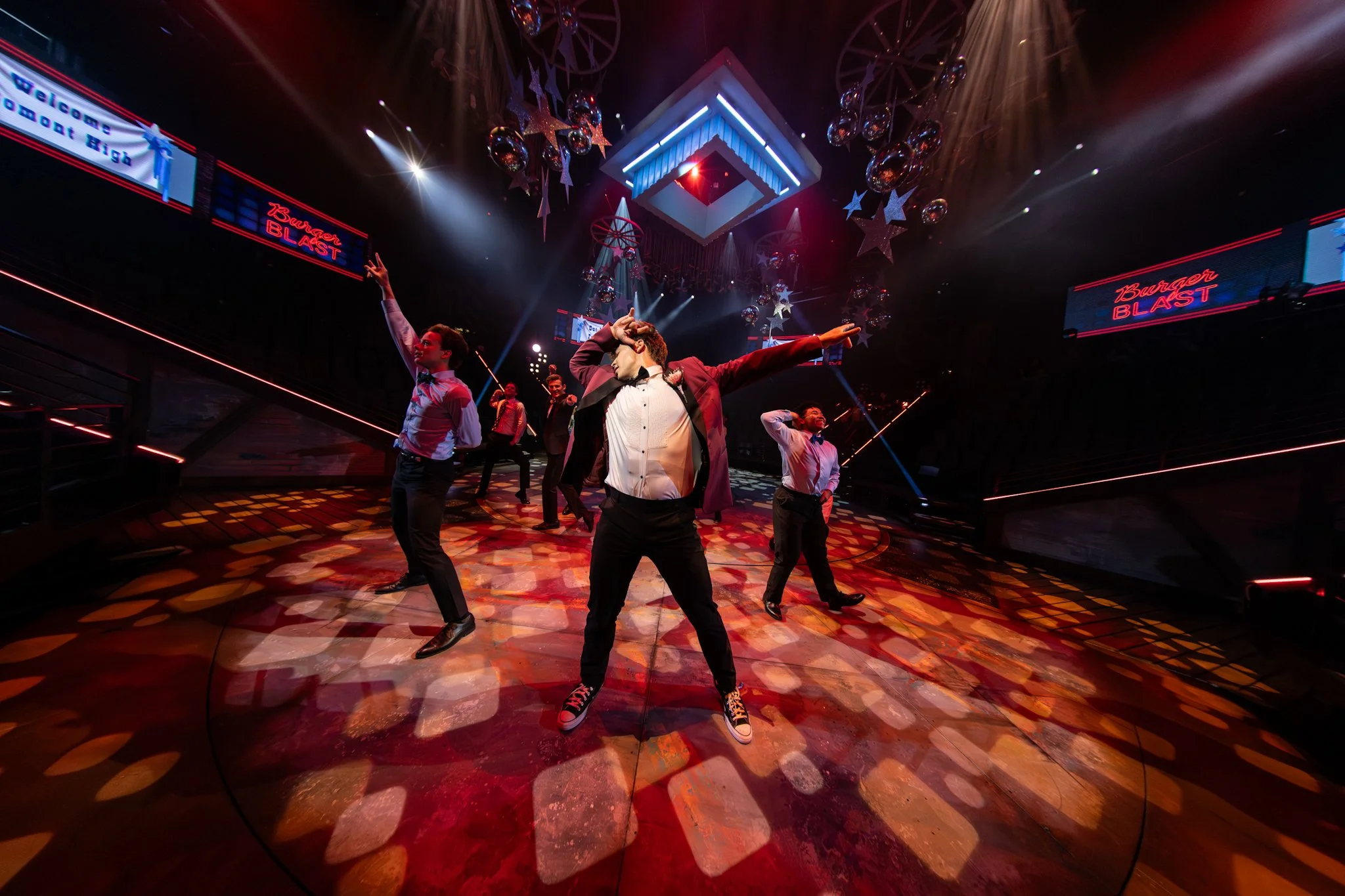
Color gradients, neon halos, and deep reds for Burger Blast
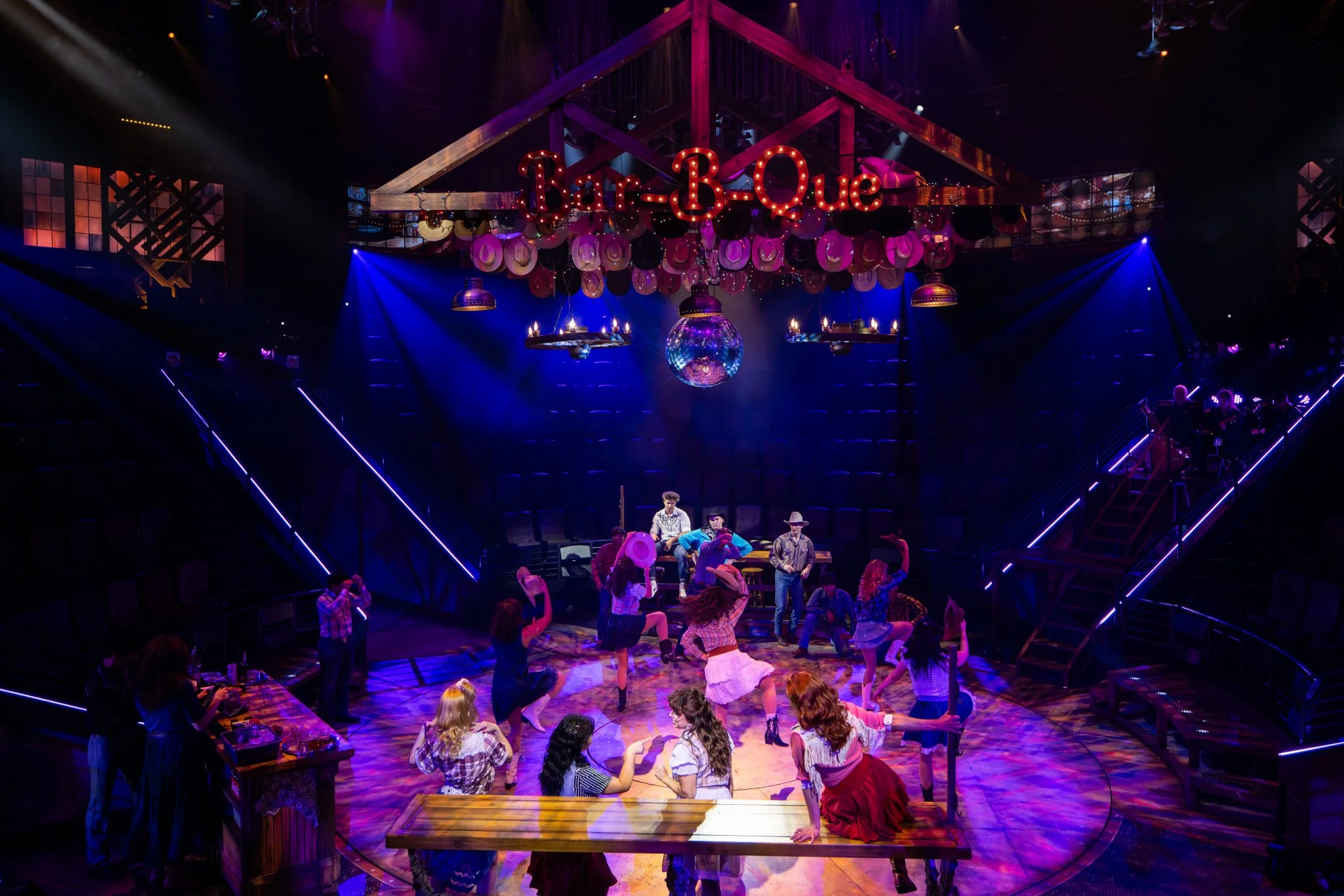
Dimly lit bar interiors with garland stringers for the BBQ scene
Night skies and dusk tones for the bridge
Because the window shapes never changed, the audience began to treat the media as part of the scenery. This let us shift tone fluidly from moment to moment while maintaining a consistent frame of reference.
“I Need a Hero”
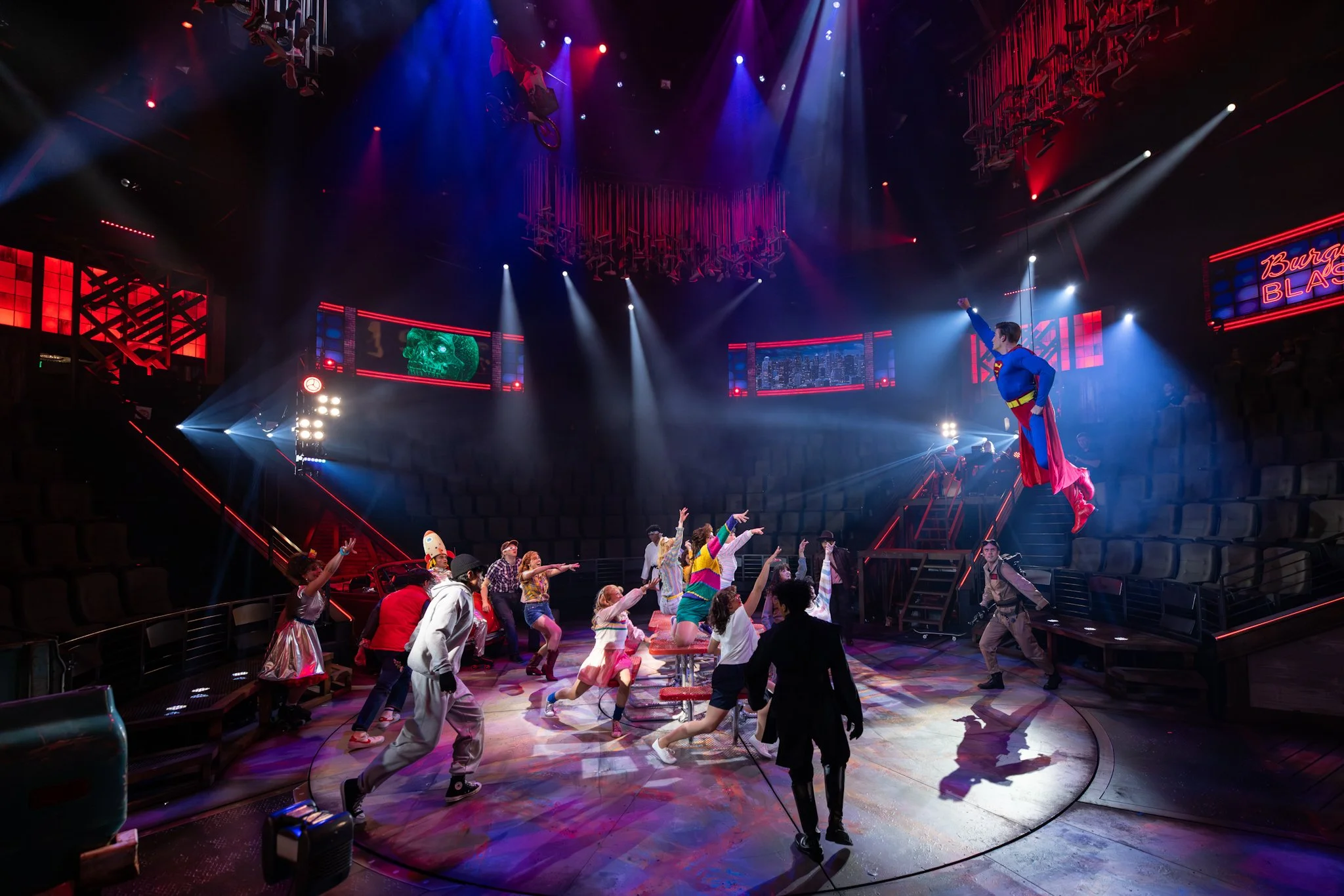
One of our bolder choices was the AI-generated superhero sequence during “I Need a Hero.”
Instead of staging the number traditionally, we developed a video projection sequence styled like a 1980s cartoon. It included digitally composited action shots, lightning bolts, and classic animated motion effects. It was designed to feel like a daydream inside the minds of our teen characters—something between Ghostbusters and a bootleg VHS action reel.
The sequence was developed in collaboration with Maddy, our content creator and media designer, and used Disguise for real-time mapping and playback. The overlays were positioned against the Burger Blast windows, giving the scene a layered and unexpected visual tone.
As a small personal detail, we hid a pair of white glasses (mine) inside the animation as an Easter egg. It was a moment of levity, and one that got a laugh every time we pointed it out.
The Lighting Language
Every choice was rooted in narrative. We approached lighting like choreography: rhythmic, intentional, and motivated by emotion.
R119 and R2001 washes grounded scenes in memory and loss
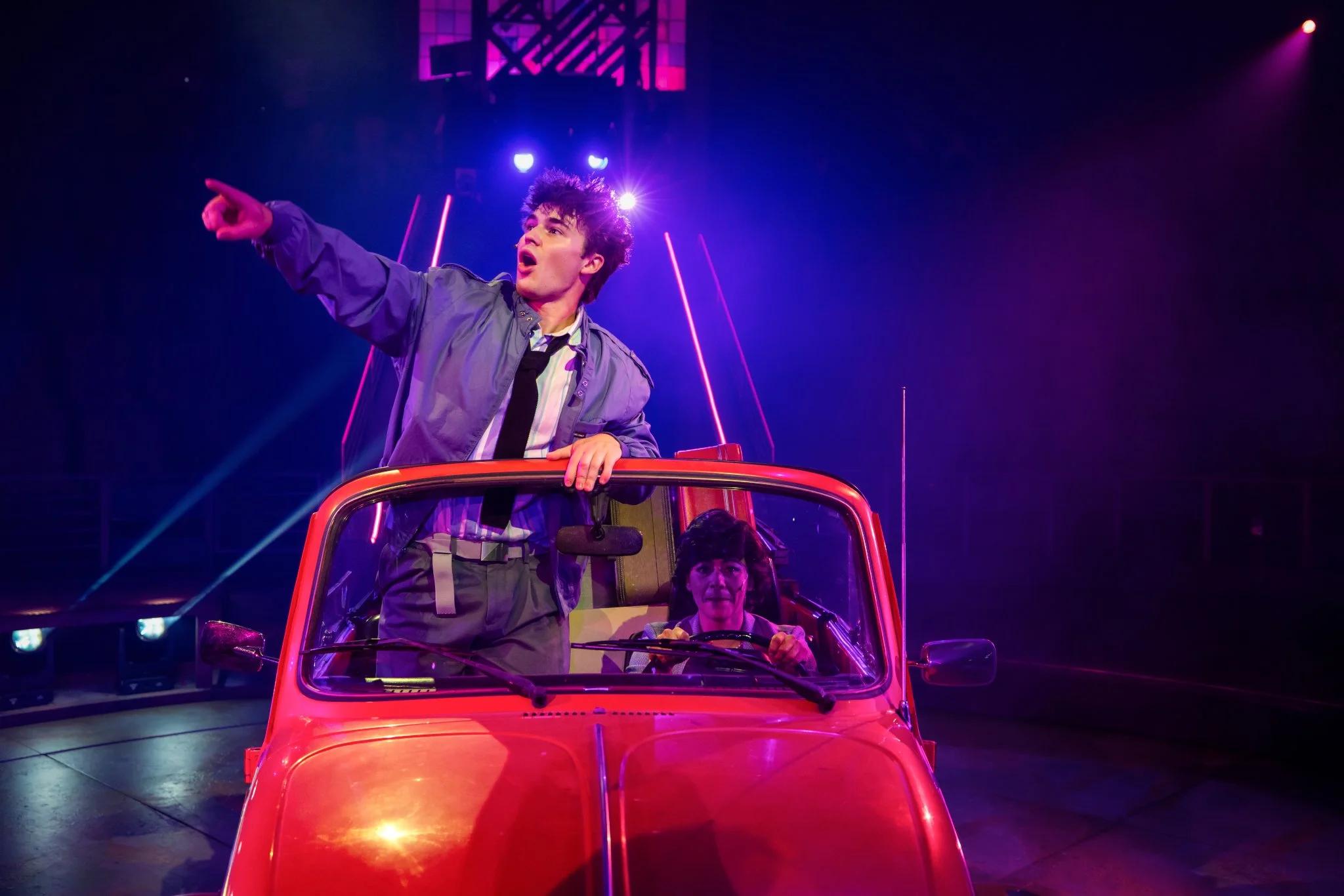
Bright cyans and saturated pinks gave voice to rebellion
Custom gobos pushed texture into unexpected places
Dozens of LED battens under audience risers brought music pulses into the architecture
The “shoedeliers” overhead caught light from over 50 custom-mounted MR16s
The Burger Blast neon signage, the gym bleachers, the hand-painted bridge railings—every scenic element was designed to reflect light, and our job was to make them feel alive.
What Critics Said
“The lighting and video design by Jaron Kent utilizes striking restraint and then stuns.”
— BroadwayWorld, July 10, 2025
“The lighting and projections were fantastic—full of energy and polish that elevated every big number.”
“The lighting and video design captured Hale’s tradition of technical spectacle while still supporting the heart of the story.”
— Rachel’s Reviews Theatre
“High-energy, heartfelt, and absolutely fun.”
— Utah Theatre Bloggers
I appreciated the diversity of feedback. Some reviewers focused on performances, some on story structure. But consistently, the visual world was recognized as detailed, intentional, and meaningful.
Final Thoughts
This show only worked because it was collaborative. Lindsey, Keaton, Maddy, and the full scenic and stage management teams brought deep care to every rehearsal, every note, every change. The show was ambitious—but we had the structure to support it.
Footloose is about fighting for joy in the face of silence. Our job was to light that fight, project that joy, and help shape a world where music could return to a town that tried to shut it out.
And in the end, we got to dance.
Photos by: Jaron Kent Hermansen, Leavitt Wells, Tyson Leavitt
Disclaimer: The views and reflections shared in this post are my own and are based on my personal creative process. While I’m proud to be an employee of Hale Centre Theatre and a member of the collaborative team behind this production, these thoughts do not represent the official views of the organization. I believe deeply in the power of collaboration and gratefully acknowledge the many artists, technicians, and storytellers whose work brought this show to life.