
Bringing Hell to the Hale: Designing “Hellfire”
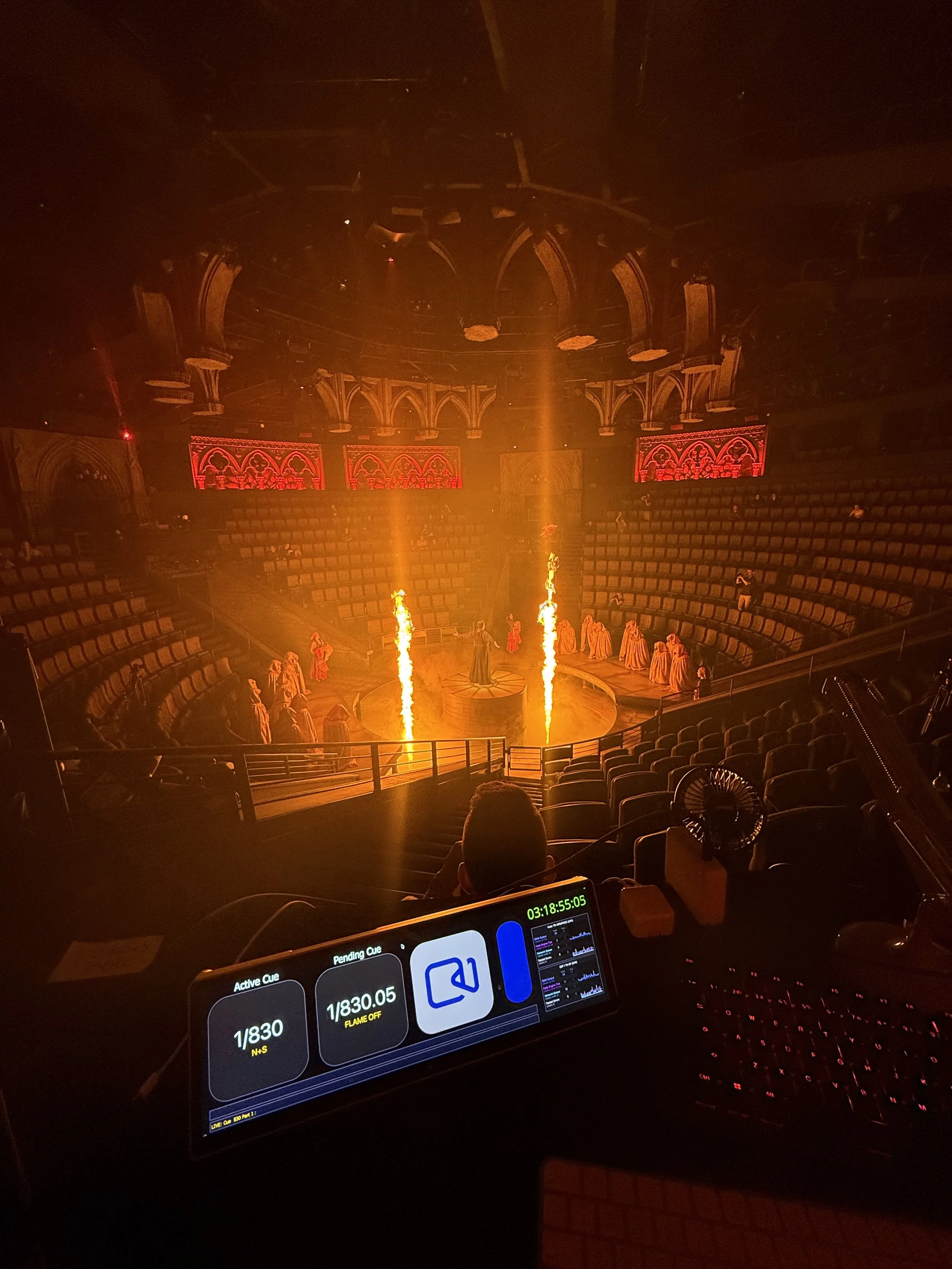
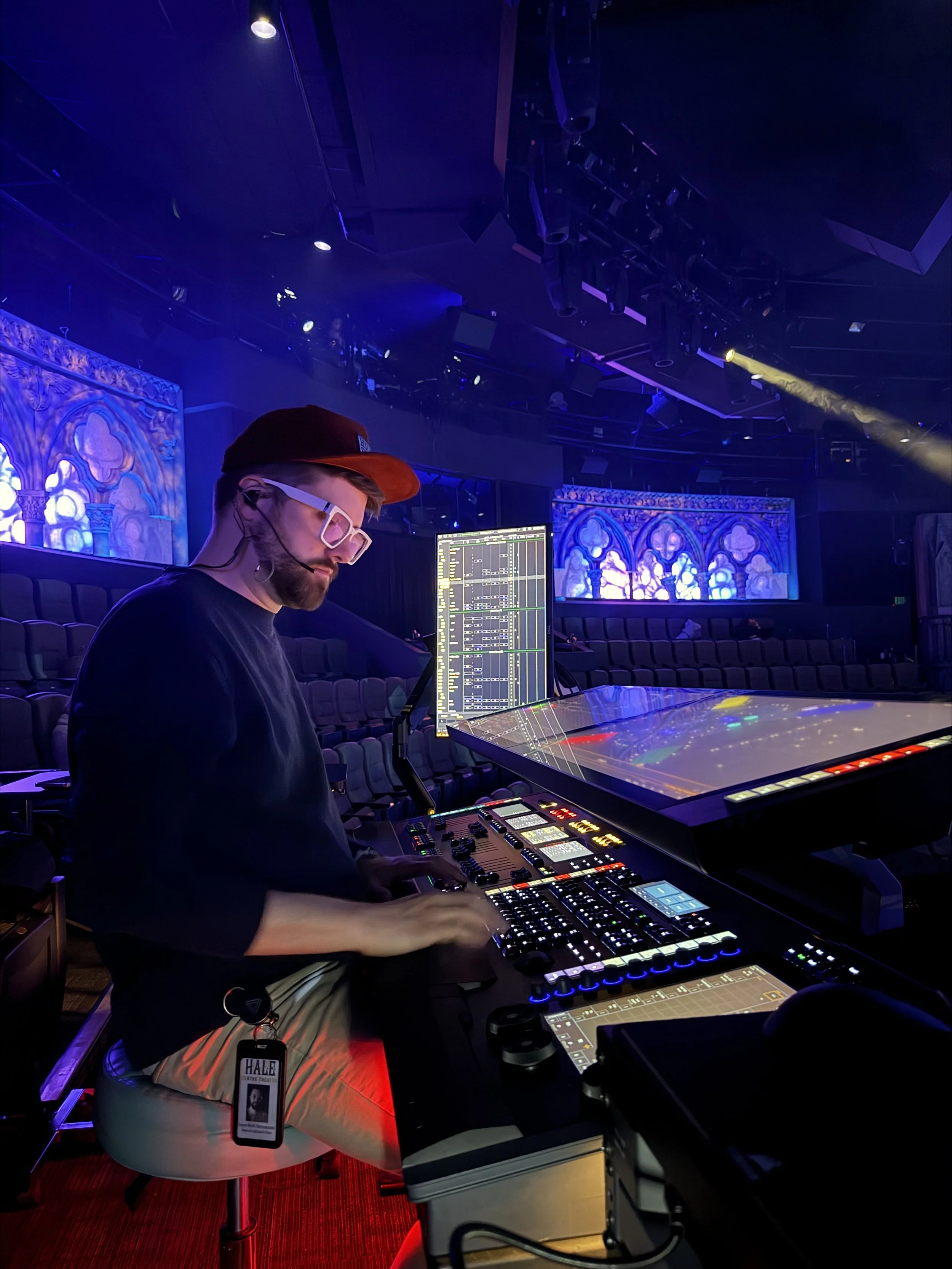
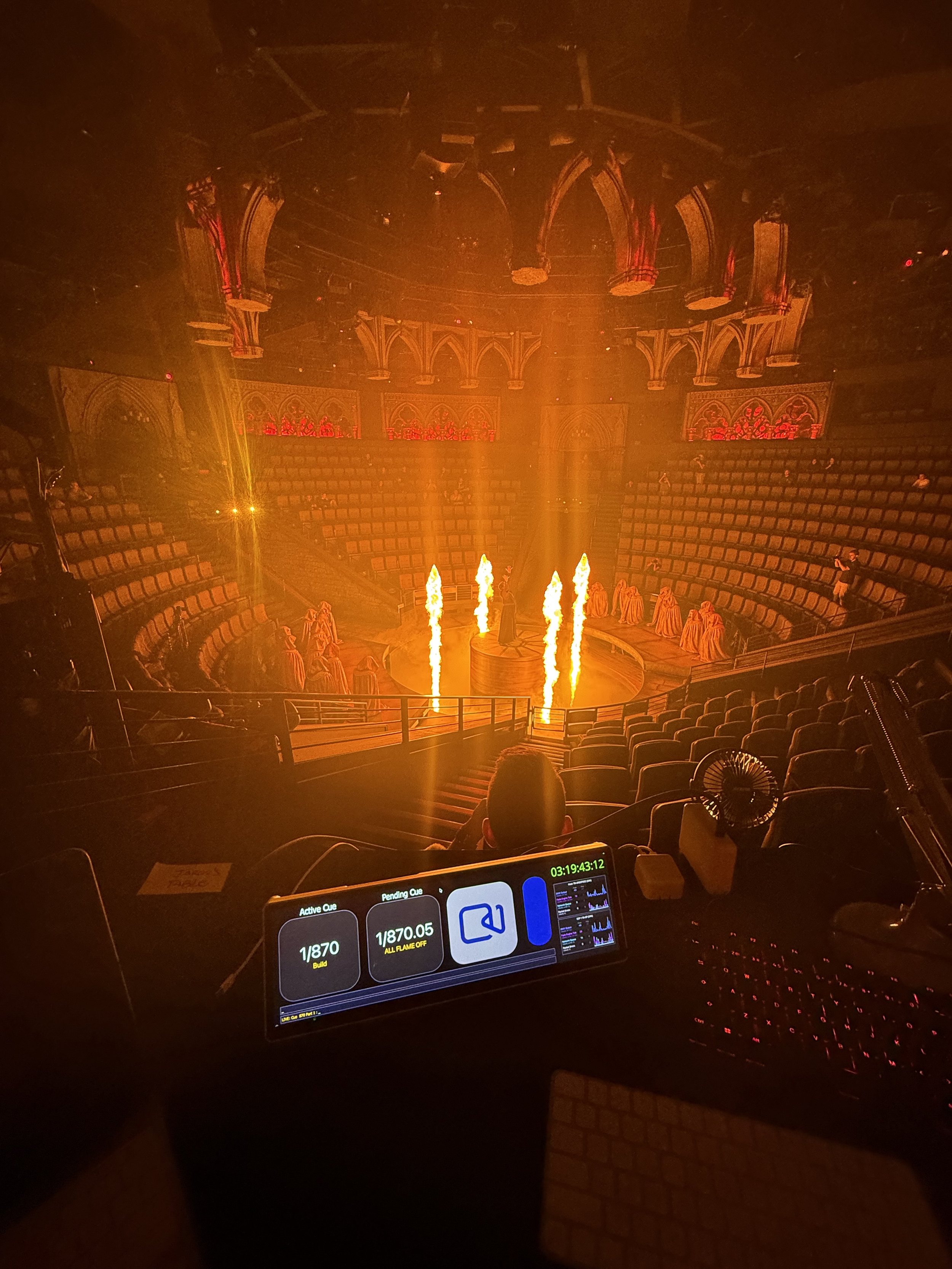
There are moments in theatre where suggestion just isn’t enough.
“Hellfire” is one of those. From the beginning, I wasn’t interested in this reading as a lighting effect or a projection trick. Frollo isn’t imagining hell in this moment, he’s confronting it. In a space where the audience sits just feet away and surrounds the action, anything that feels representational breaks down quickly. If it looks like an effect, the moment loses its weight.
So the goal became straightforward: make it feel real.
Not realistic in a cinematic sense, and not theatrical in a way that asks the audience to fill in the gaps. It needed to have presence. Something with weight and consequence. Something that felt like it was happening to Frollo, not just around him.
That idea drove every decision that followed. Instead of asking “what does hell look like,” the questions became “how does it behave in the room?” How does it occupy space, how does it surround without isolating, and how close can it get before it stops feeling dangerous and starts feeling uncontrolled?
Once I started asking myself those questions,, the design stopped being about adding elements and became about building an environment the audience couldn’t easily look away from.
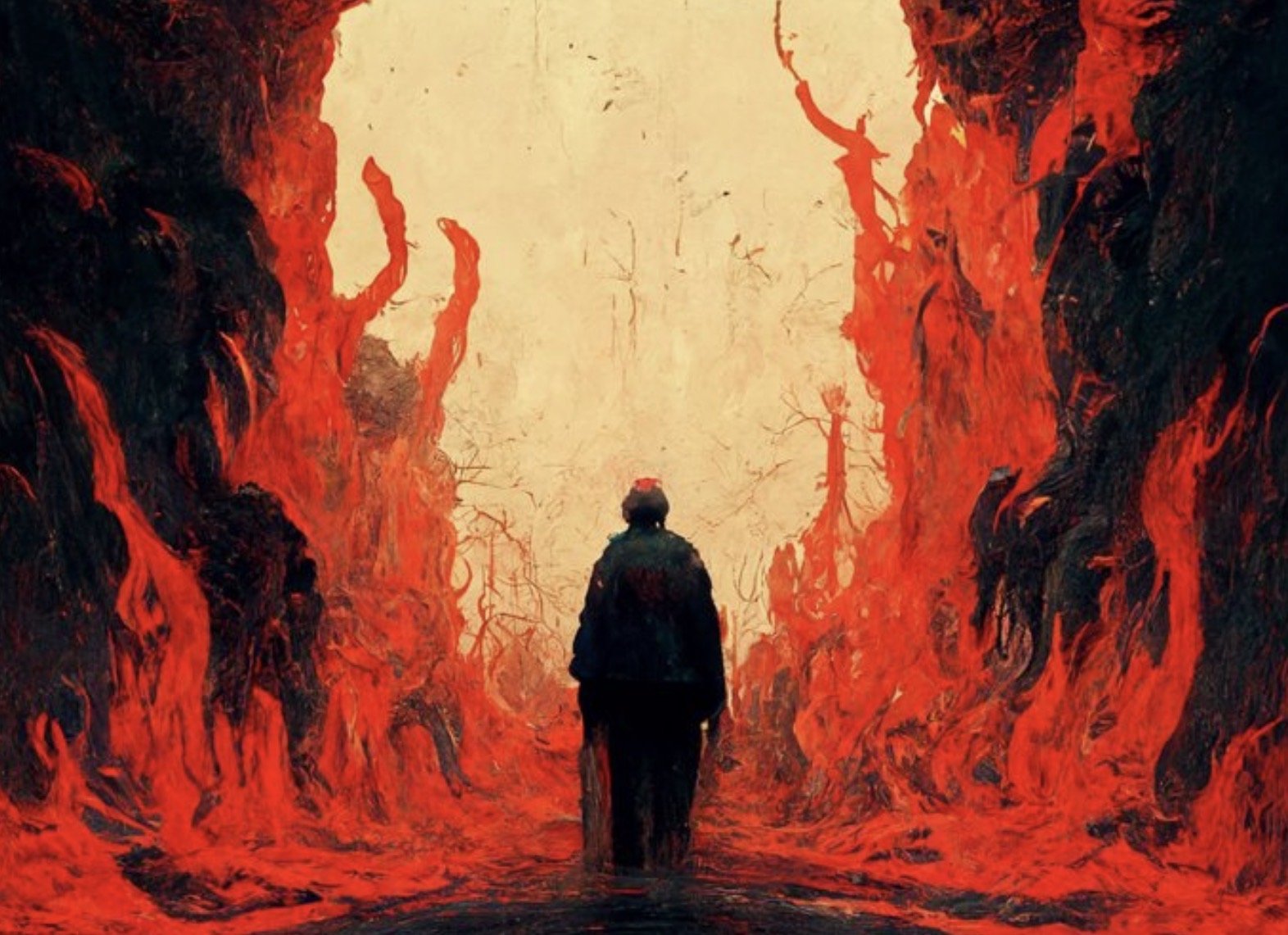
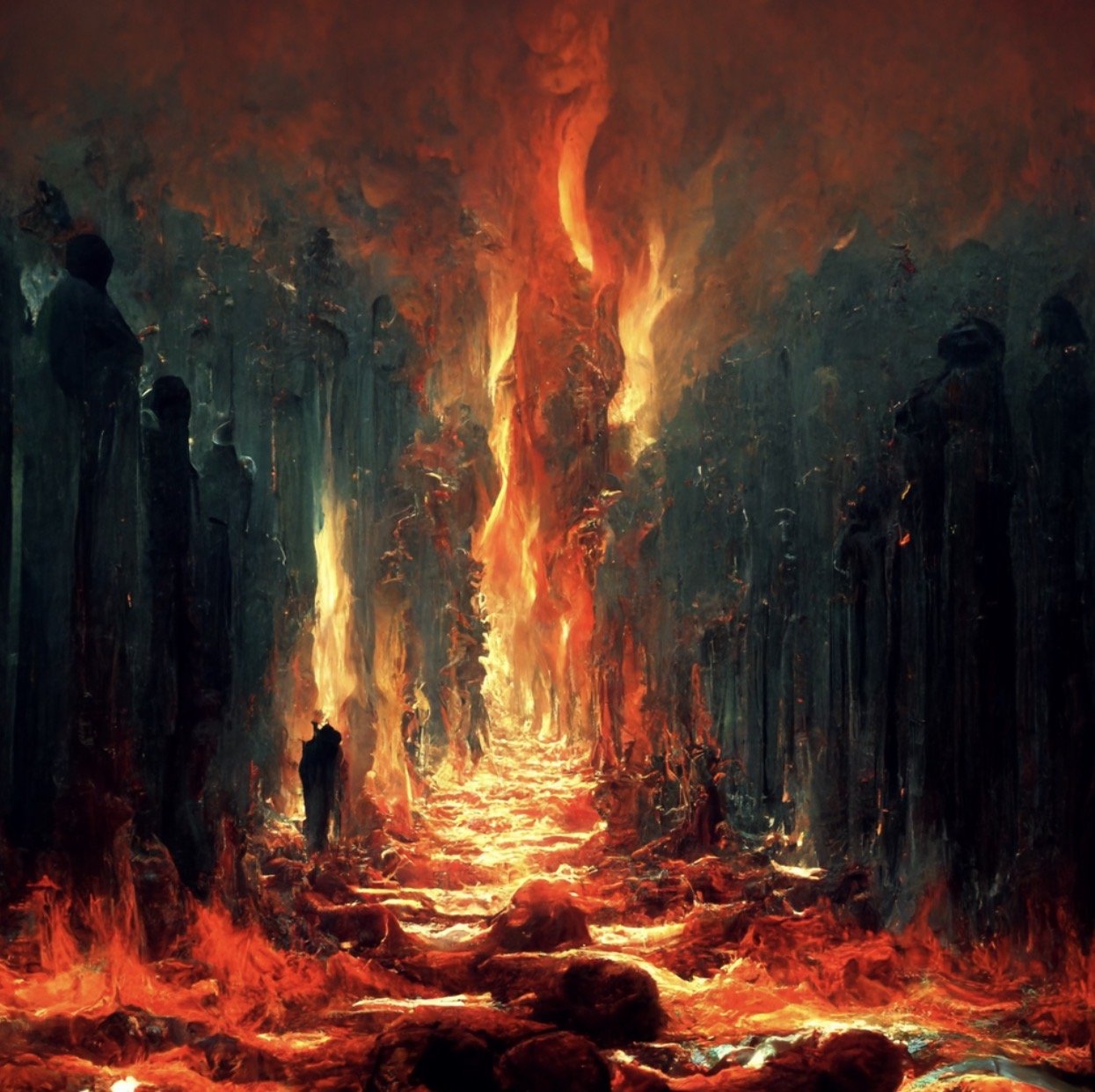
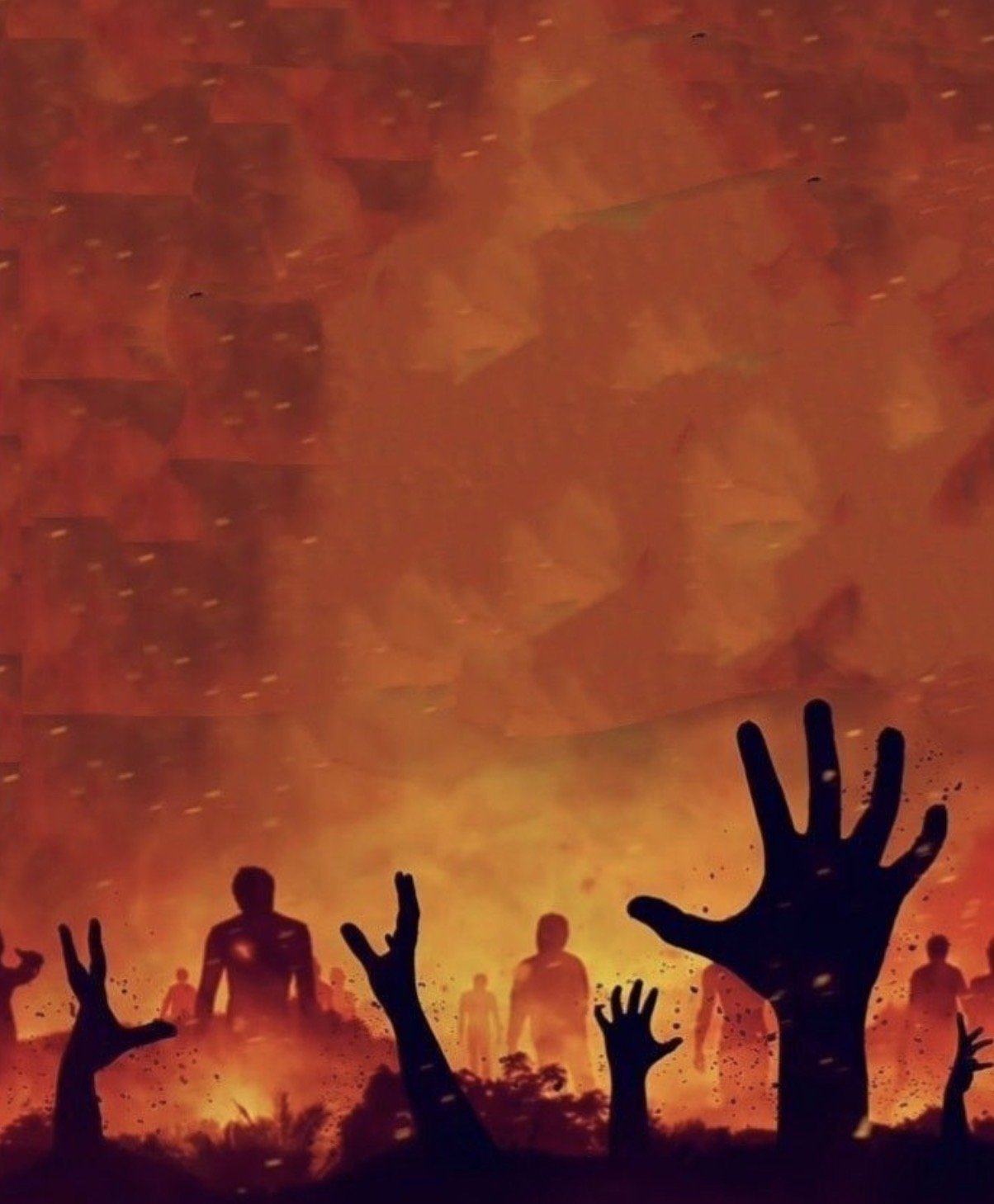
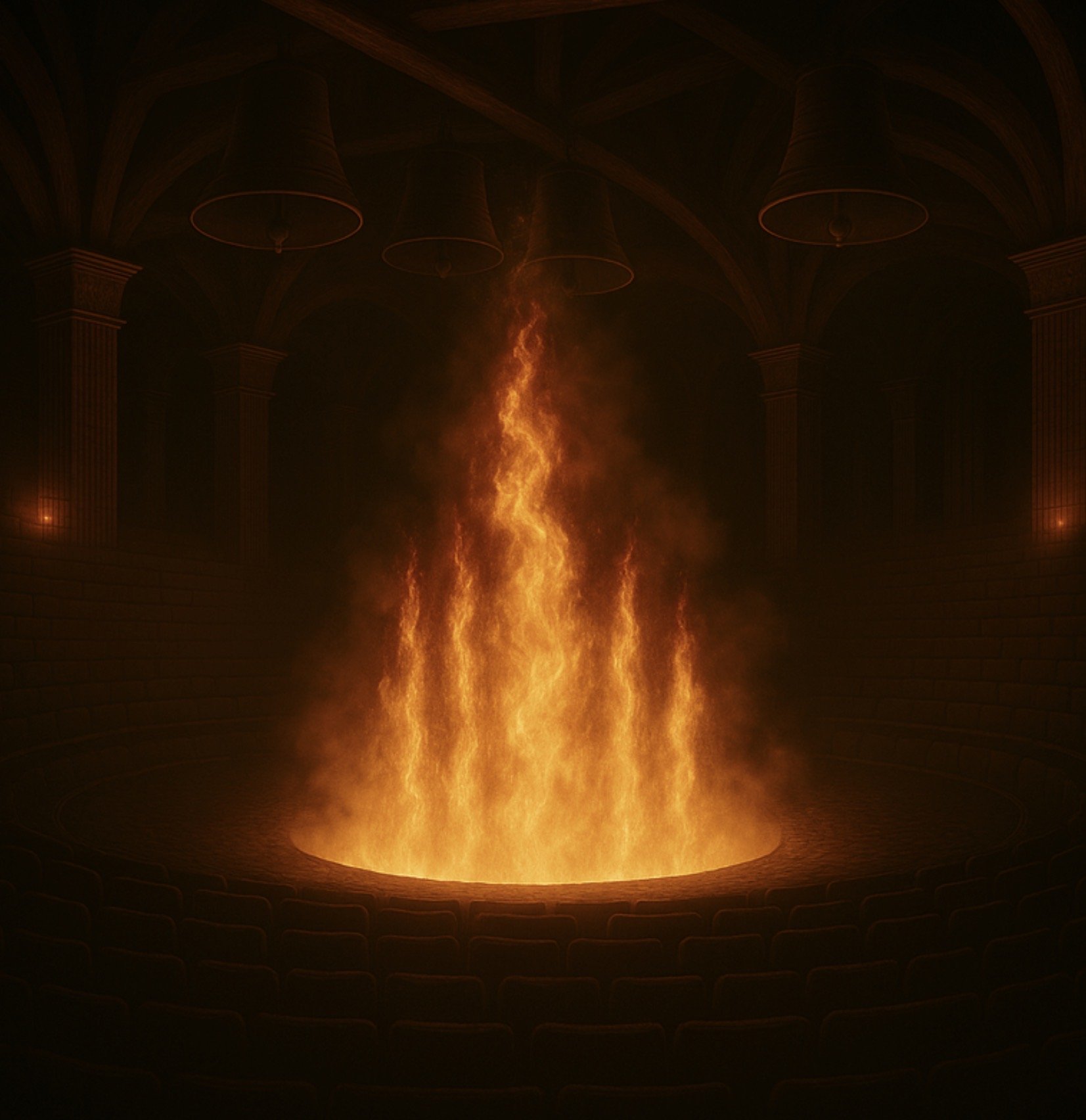
I started by looking at reference, not just images of fire, but how it behaves in space. Verticality, density, the way it builds and releases energy. What became clear early on was that the fire couldn’t feel applied. It needed to feel like it was originating from somewhere below the room, as if the space itself was giving way to an underworld of my own making.
That thinking carried into the renderings.
At that stage, I wasn’t designing an effect, I was working through spatial relationships. In an in-the-round environment, there’s no single front. The audience is everywhere, which means the fire has to hold up from every angle while still framing the actor.
The central question then became: how do you surround Frollo without isolating him? One rendition of the moment had fanning walls of flame surrounding him and dividing him from the chorus.
If the fire became a wall, you lose him. If it’s too sparse, you lose the pressure of the moment.
The solution was a controlled perimeter. Not continuous, but articulated. Something that could define a boundary, then break it. A system that could wrap him, open space when needed, and then strike with intention.
Once that geometry locked in, the challenge shifted from composition to execution.
After looking at a few options, I landed on a product by Showven. It gave us the control we needed to make this repeatable in a theatrical environment. Height, timing, consistency. With these parameters, I wasn’t just triggering it, I was designing it.
From there it was a lot of iteration. Different nozzles, different heights, adjusting for how the flame read at various distances. Playing with different ambient light and ensuring that the lighting worked and focused the effect. We started outside to understand the raw behavior of the units, then brought everything inside and recalibrated for the room. In an in-the-round space, scale shifts quickly. What feels controlled in isolation can feel overwhelming once the audience is a few feet away on all sides.
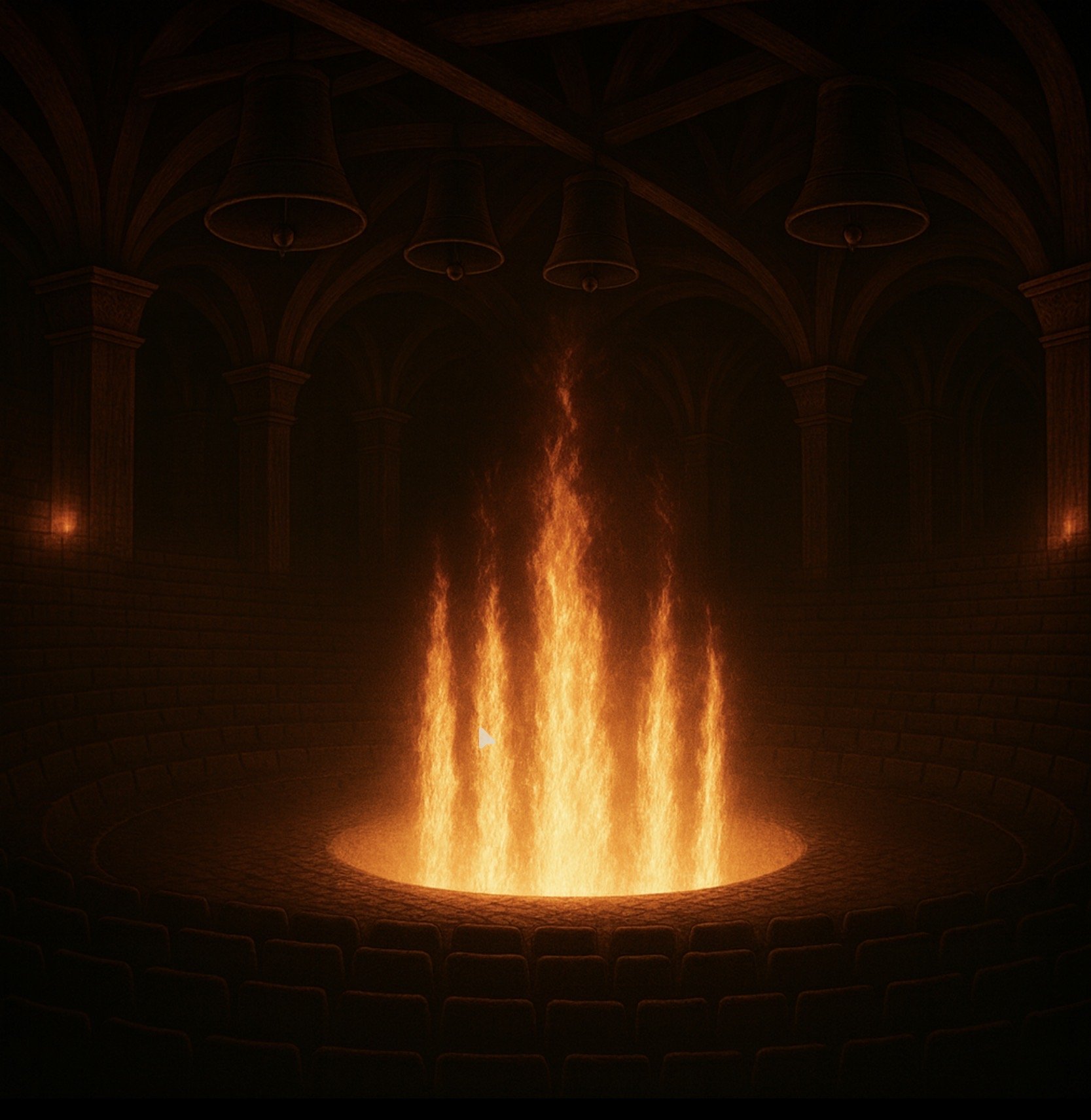
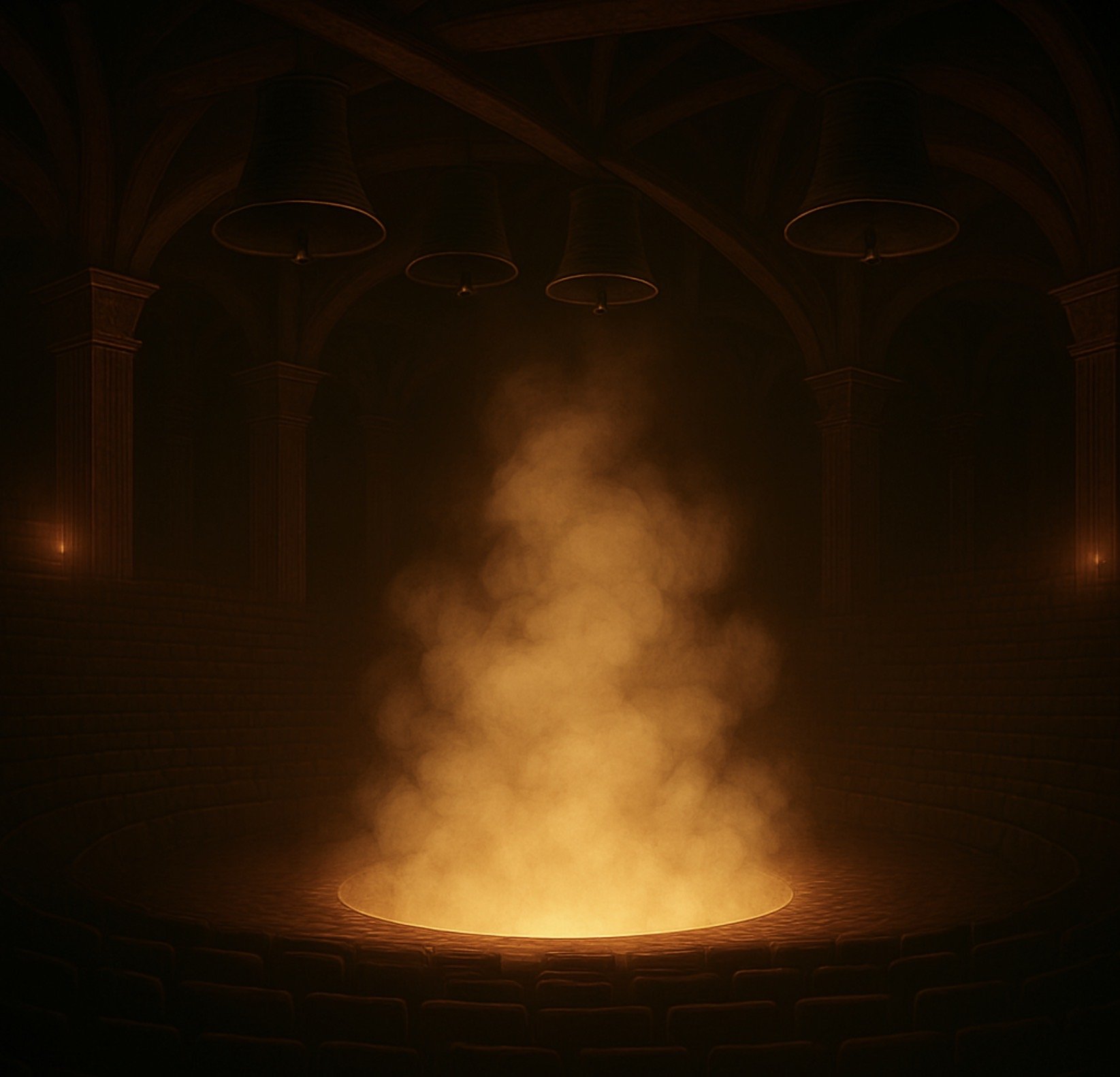
I knew from the beginning that flame alone wouldn’t be enough. In the early renderings, (utilizing controlled AI to help me envision the moment) the pit was always filled with fog. The goal wasn’t just vertical hits of fire, it was fire interacting with something. Something with density. Something it could catch and live inside of. I didn’t want clean columns of flame. That reads as an effect. I wanted it to feel like it was coming from below, like the room itself was starting to give way to the underworld we were building. The air needed to feel active, not empty.
That thinking extended beyond the flame itself. The glow became just as important as the fire. Even when the units weren’t firing, the space needed to feel like it was holding heat. Light was used to let the environment breathe between hits, so the fire didn’t feel like isolated cues, but part of a continuous state. Lighting the moment from above into the fog-filled pit created an ominous temptation-filled void, and felt like it rounded the number out before the fire even begins to do its job. When we got into testing, that instinct held. The flame caught the atmosphere the way I hoped it would. It spread, broke up, and started to feel like it was actually emerging out of the pit instead of just shooting straight up.
That’s when it stopped feeling like an effect and started feeling like hell itself.
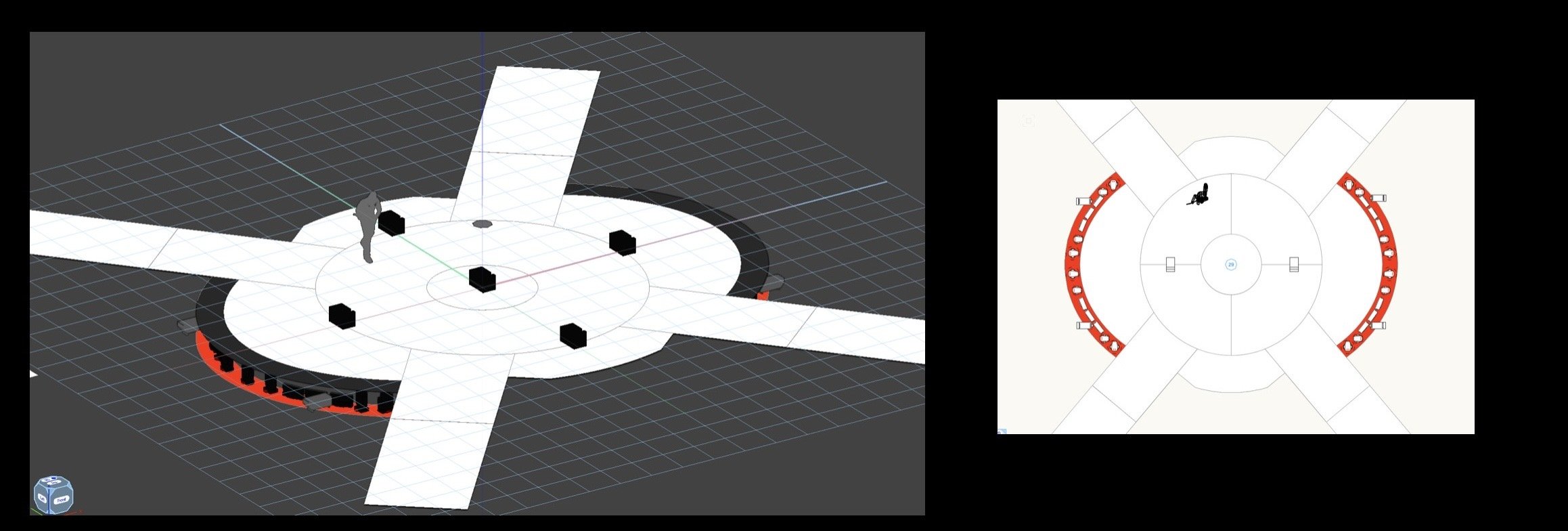
3dmodeling of potential flamer positions.
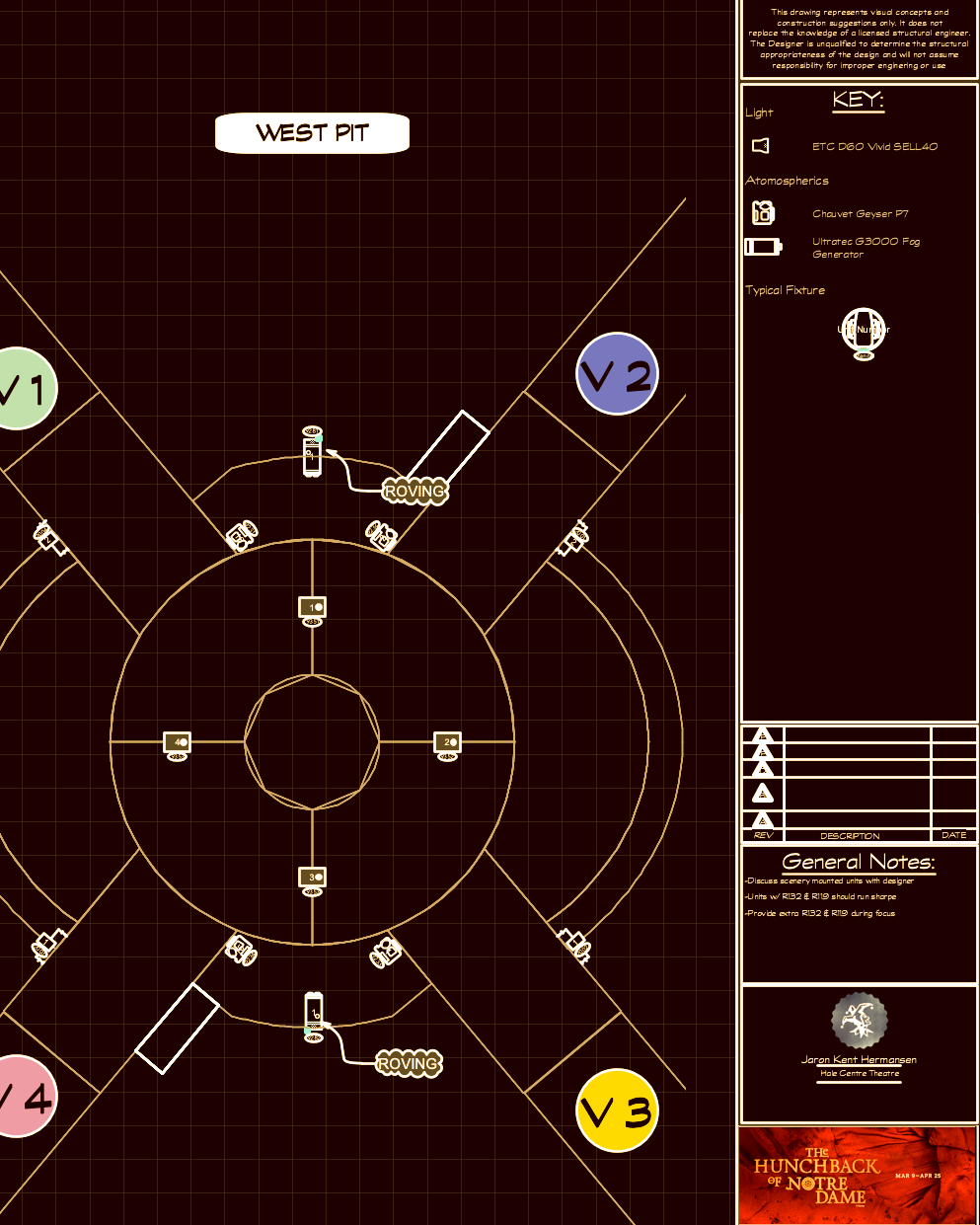
Drafting of flamer positions.
At every stage of the process, layout and safety dictated the design. The director, David Smith, wanted Frollo dead center, fully surrounded, putting all the pressure on precision. We measured exact distances to the performer, defined hard safety zones, and built the system so those boundaries were never in question.
Timing became just as critical as placement. The flame hits needed to land with the music and performance without losing tension. Every enable, every trigger, every duration was tuned so the moment felt aggressive without becoming chaotic.
This is where the team was pivotal. Emma Belnap, our production electrician, was instrumental in getting these units dialed in. Alongside our pyro team led by Senior Technical Director Andrew Ellis and our fire marshal, we pushed the system to a place where it feels dangerous, but behaves with complete consistency. Associate Lighting Designer and Programmer Collin Schmeirer kept the moment clean and optimized the impact of each cue.
That balance is the whole thing.
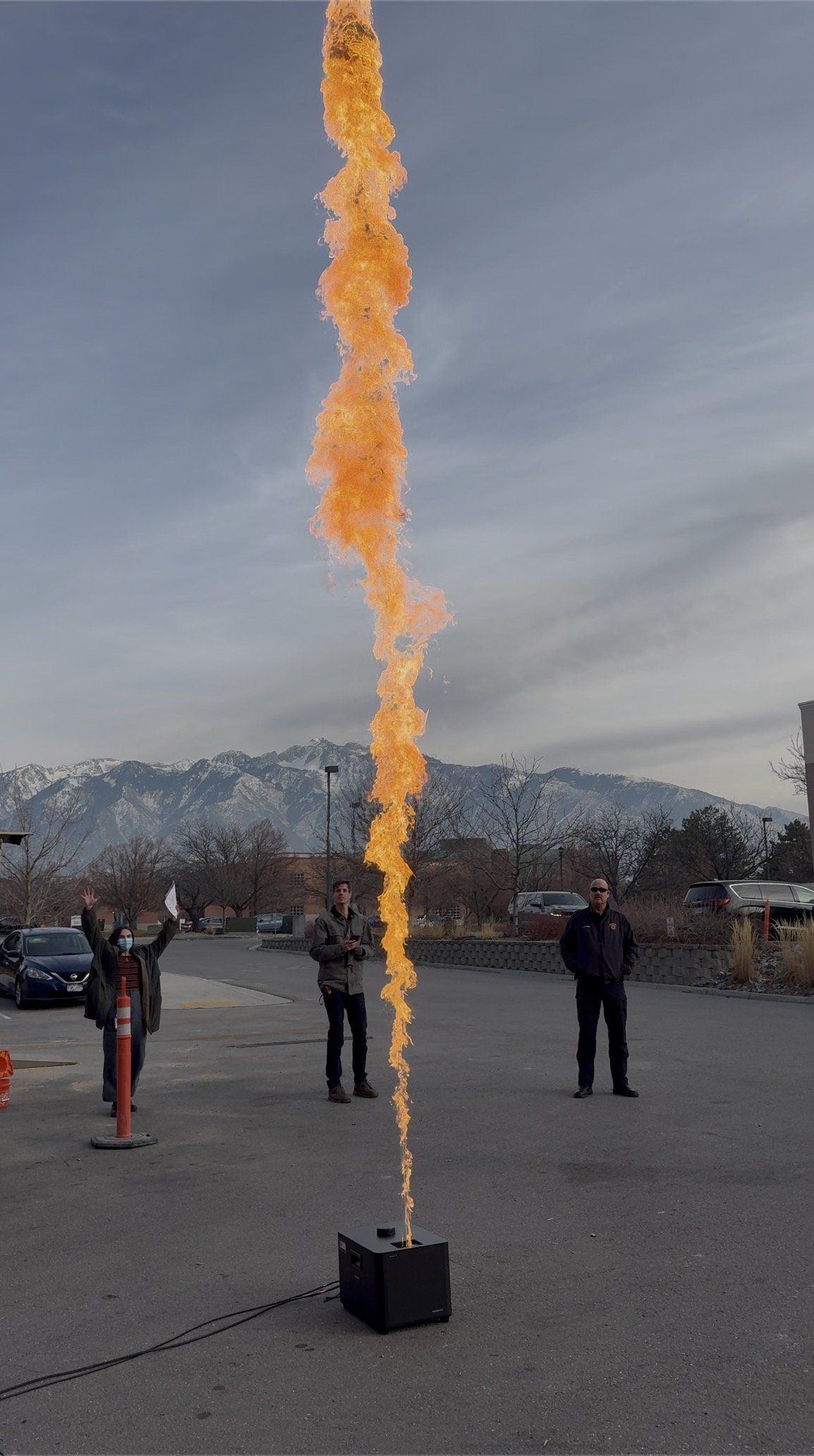
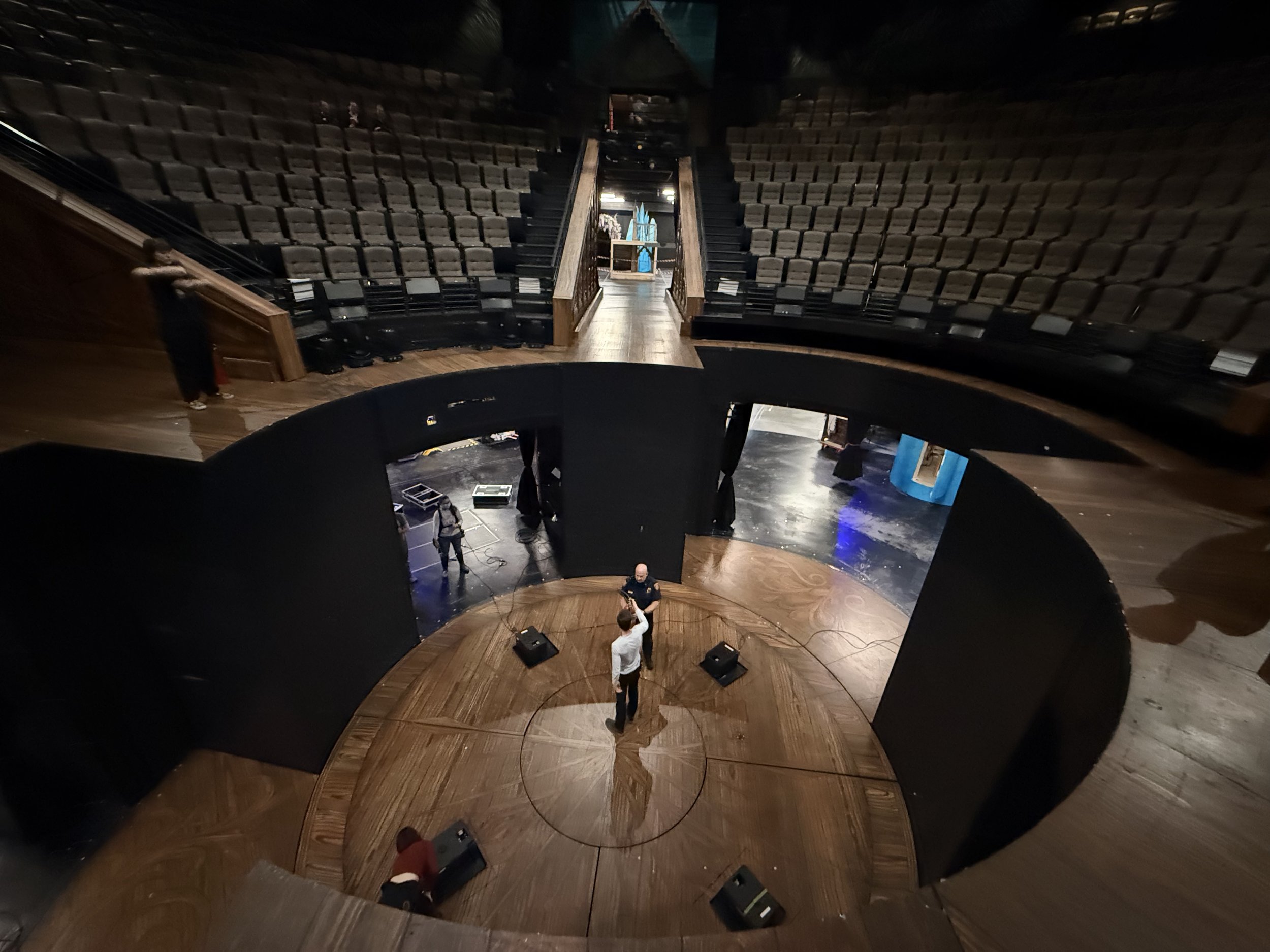
Emma Belnap, Andrew Ellis, & Sandy City Fire Marshal test our units Once the flame system was in a place we could trust, everything else started to build on top of it. Lighting wasn’t just supporting the fire, it was feeding it. Even when the units weren’t firing, the room stayed hot with deep reds, oranges, flickering and texture. The space never really reset, it just kept breathing. Hell was completed using side light sculpting, modeling the chorus of accusers, and directional lighting focusing the dancers temping Frollo’s very being.
Nate Bartone’s architecture was treated the same way. It wasn’t something we were lighting, it was something we were intentionally burning. The details in the arches and stone surfaces caught the burning glow, and it felt like the whole set was heating up, not just the depths below the pit but the top of the cathedral itself. The projection design matched beat to beat and flame to flame. Madeline Ashton’s content hit with each eruption, so every burst had somewhere to go. It didn’t just shoot up and disappear, it carried out into the room and up through screens. Sound and automation elevated the weight of it all. Michelle Ohumukini’s low end gave each hit something you actually felt, and Nick Herring kept Frollo present by moving him through and around the moment.
At a magical point it was no longer seperate pieces, and it became the room. So, when Frollo commands the flame filled cathedral, surrounded by heat and fire, the audience is engulfed in his rage. The moment lands the way it’s supposed to, because It doesn’t feel like a design, It feels like an eternal torment he can’t escape.
For me, that’s what this is all about.
It’s not just about making something that reads as spectacle, but building something that feels emotionally inevitable. A moment Where everything lines up and the audience stops caring about how it works and starts noticing how it makes them feel.
This moment will always be something that flowed through concept, to designing with the design team and then bringing it to life with the production team. I will never forget seeing it take its first breath in the room, and then watching it takes the audiences breath away.
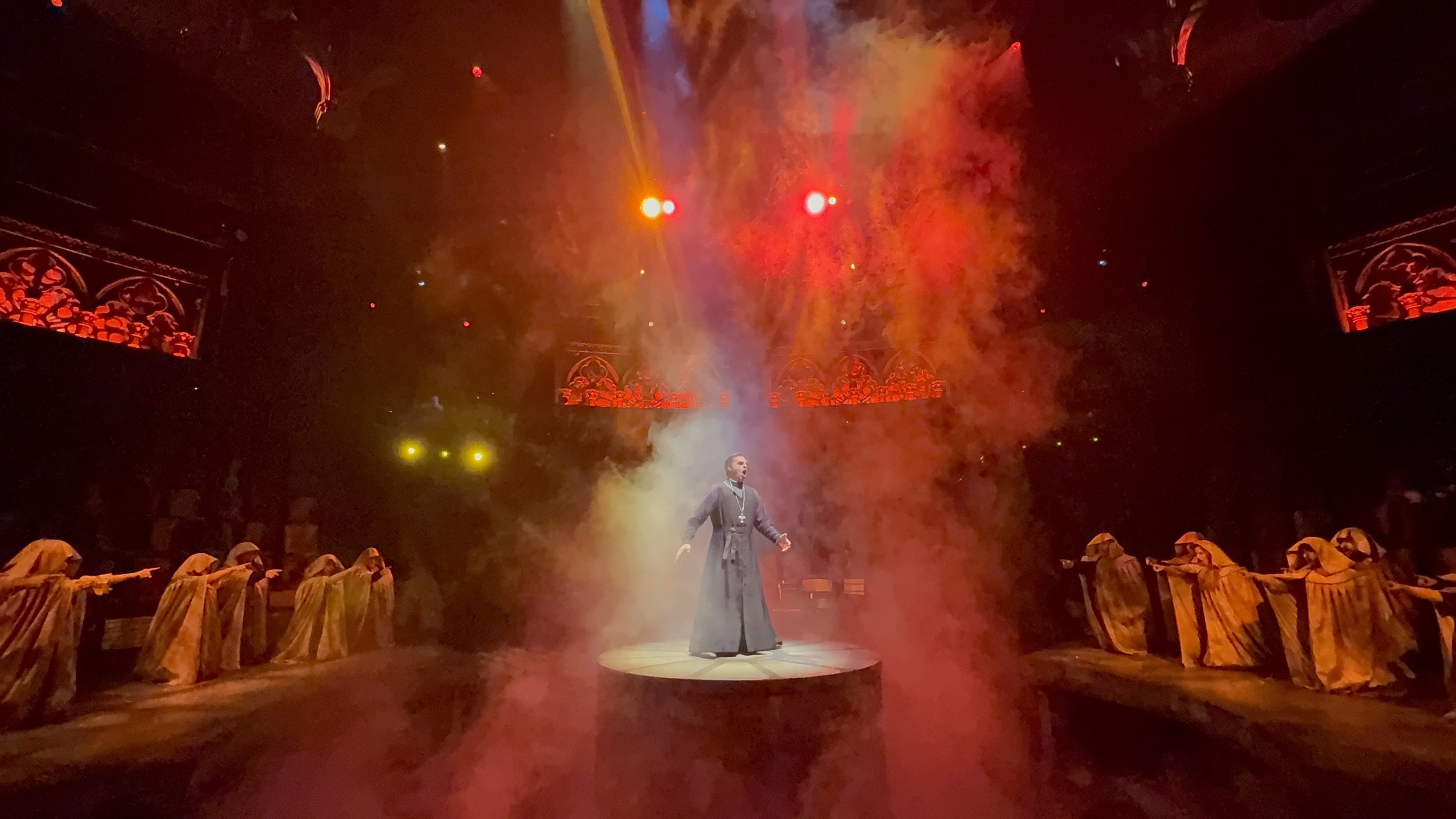
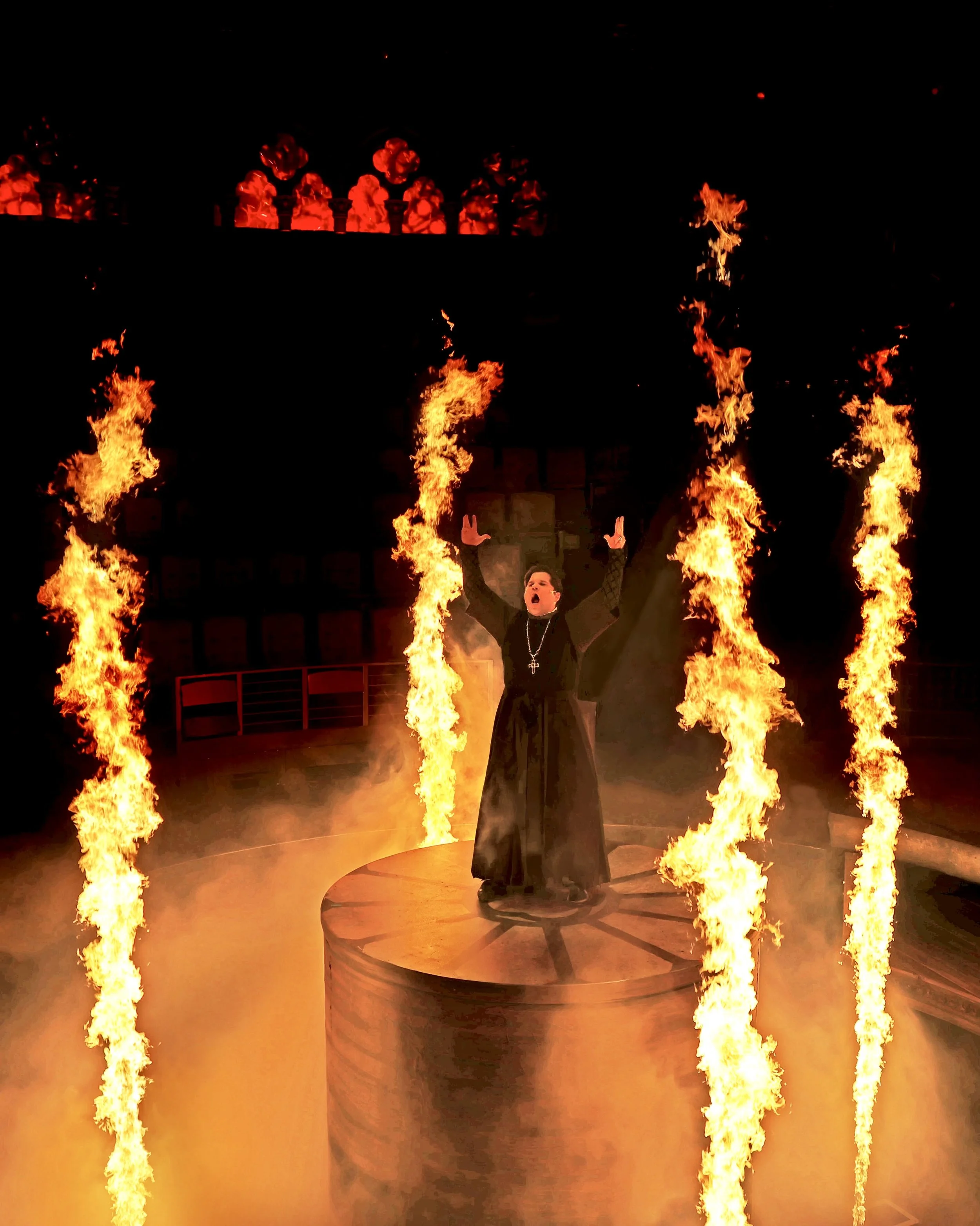
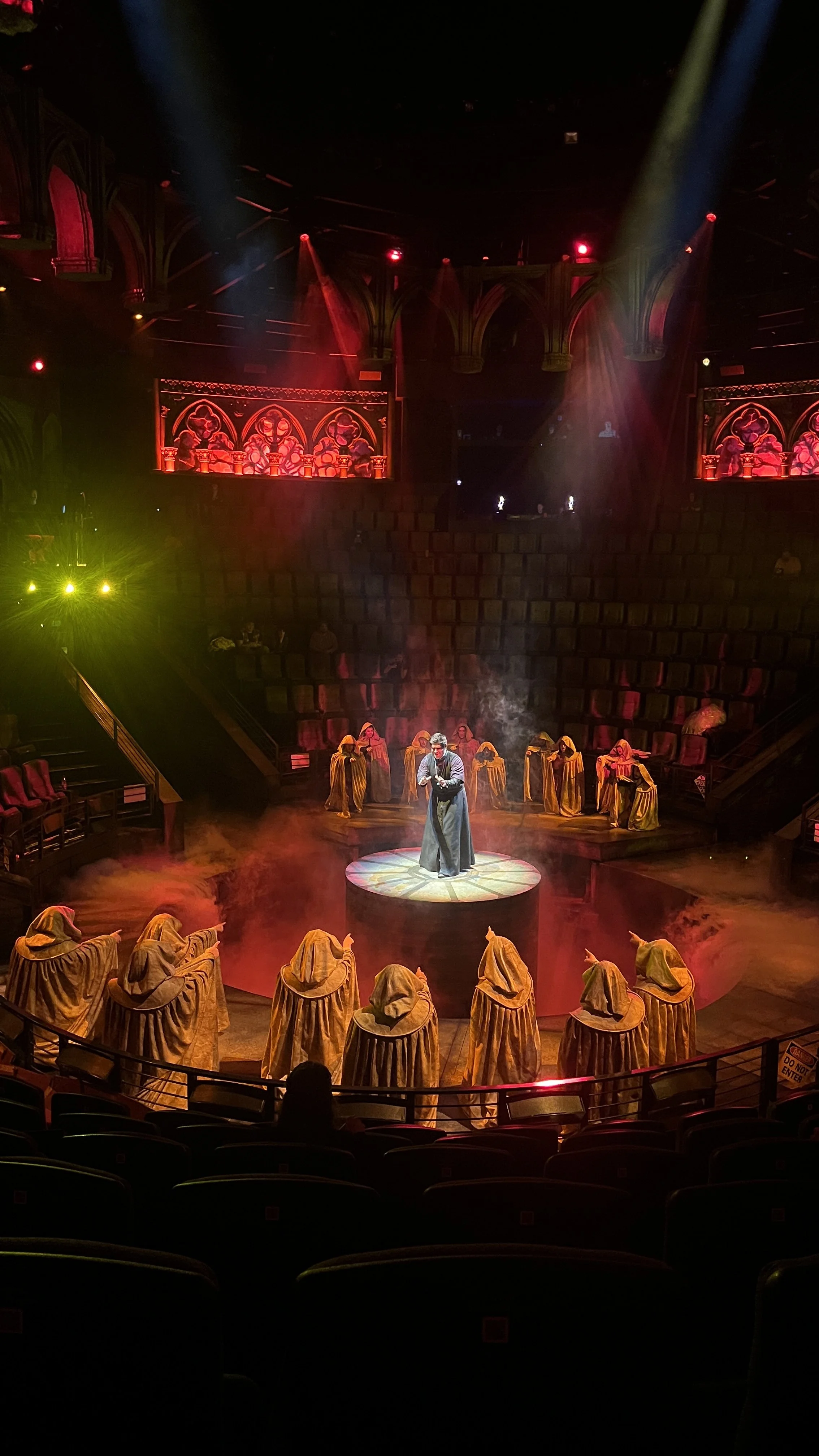
Photo & Videos By: Jaron Hermansen, Nate Bertone, Maddeline Ashton. Edited by: Kurtis Blackburn
Disclaimer: The views and reflections shared in this post are my own and are based on my personal creative process. While I’m proud to be an employee of Hale Centre Theatre and a member of the incredible collaborative team behind this production, these thoughts do not represent the official views of the organization. I believe deeply in the power of collaboration, and I gratefully acknowledge the many artists, technicians, and storytellers whose work brought this show to life.
Click below to view the digital program for this production